When Your Own Organization Becomes the Obstacle: The Enterprise Cost of Departmental Isolation
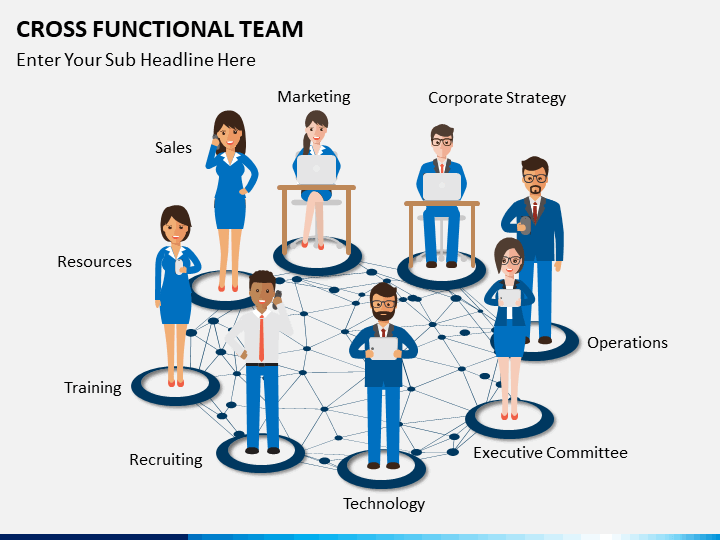
Photo: corporate team cross-functional meeting enterprise office collaboration, via cdn.sketchbubble.com
The Problem That Doesn't Show Up on the Balance Sheet
Ask most executives whether their organization has a silo problem, and the honest ones will say yes. Ask them to quantify it, and the conversation tends to go quiet. That silence is precisely the issue. Organizational silos are among the most expensive structural inefficiencies in enterprise operations, yet they rarely surface as a line item in quarterly reviews or strategic audits.
The cost is real, however. A 2023 analysis by McKinsey & Company estimated that poor cross-functional collaboration costs large organizations an average of 20 to 30 percent of their potential productivity. For a $500 million enterprise, that figure represents tens of millions of dollars in lost output—not from external market forces, but from the organization working against itself.
Understanding how silos form, how they compound over time, and how to dismantle them systematically is not a soft-skills conversation. It is a core strategic imperative.
How Silos Form in Otherwise Functional Organizations
Silos are rarely the product of bad intentions. More often, they emerge from structures that once made operational sense. Departmental specialization, budget autonomy, and functional accountability are all legitimate organizational design principles. The problem arises when these principles calcify into walls rather than boundaries.
Consider a common scenario in mid-to-large US enterprises: the sales team commits to a product customization during a client negotiation without consulting the operations or technology teams. Operations, unaware of the commitment, continues its standard production schedule. The technology team, meanwhile, is allocating resources toward a platform migration that conflicts with the customization timeline. By the time all three parties compare notes, the client deadline has been missed, internal blame is flying, and the cost of the misalignment—in rework, overtime, and client relationship damage—dwarfs whatever margin the sale was meant to generate.
This is not an unusual scenario. It is a structural inevitability when departments optimize for their own metrics without visibility into enterprise-wide priorities.
Redundancy Is Not Resilience
One of the most insidious effects of siloed operations is the proliferation of duplicate functions. When departments cannot or do not communicate effectively, they tend to build their own capabilities rather than share existing ones. Marketing develops its own data analytics function because it cannot get timely reports from the central business intelligence team. Finance builds a shadow procurement process because the official approval workflow is too slow. HR launches its own project management tools because it was excluded from the enterprise-wide technology rollout.
Each of these decisions is defensible in isolation. Collectively, they represent a significant and unnecessary drain on enterprise resources. Duplicate software licensing, redundant headcount, inconsistent data sets, and incompatible processes all accumulate into a structural tax that the organization pays indefinitely.
The distinction between redundancy and resilience is important here. True operational resilience comes from deliberate redundancy in critical systems—backup infrastructure, contingency suppliers, crisis protocols. The redundancy that silos create, by contrast, is unplanned, uncoordinated, and largely invisible until someone conducts an enterprise-wide process audit.
Conflicting Decisions at the Strategic Level
The consequences of departmental isolation become most acute when they reach the strategic tier. When business units or functional departments make decisions independently, those decisions can—and frequently do—contradict each other.
A technology team investing in a cloud infrastructure overhaul may be moving in the exact opposite direction from a finance team that has just approved a long-term contract with an on-premise vendor. A marketing division launching a new brand positioning campaign may be unaware that the product team is six months away from a major redesign. A legal and compliance department updating its vendor vetting protocols may not have communicated those changes to procurement, which has already signed letters of intent with three suppliers that no longer meet the new standards.
These are not hypothetical examples. They represent patterns that enterprise consultants and internal auditors encounter regularly across industries. The strategic cost is not just operational disruption—it is the erosion of organizational credibility, both internally among staff and externally among clients and partners.
A Framework for Breaking Down Barriers
Addressing silo culture requires more than good intentions or an all-hands meeting about collaboration. It requires structural intervention at three levels: governance, metrics, and communication architecture.
Governance Reform: Cross-functional decision rights must be explicitly defined. For any initiative that touches more than one department, the enterprise should establish a clear ownership model that assigns primary accountability while mandating input from affected functions before decisions are finalized. This is not about creating bureaucratic approval chains—it is about ensuring that decisions are made with complete information.
Shared KPIs: Perhaps the most powerful lever for dismantling silos is the redesign of performance metrics. When sales is measured solely on revenue, operations solely on cost efficiency, and technology solely on uptime, each team will rationally optimize for its own metric—often at the expense of the others. Introducing shared KPIs that cross departmental lines—customer retention rates, time-to-market, cross-sell conversion—creates aligned incentives that make collaboration the path of least resistance rather than an additional burden.
Communication Architecture: Many organizations default to email chains and ad hoc meetings as their primary cross-functional communication mechanism. This is insufficient at enterprise scale. A structured communication architecture—including regular cross-departmental syncs at the operational level, shared project dashboards, and executive-level integration reviews—creates the visibility that prevents conflicting decisions before they occur.
The Leadership Dimension
No structural reform succeeds without leadership alignment. Senior executives who manage their departments as independent fiefdoms—protecting headcount, guarding data, and resisting shared accountability—will undermine even the most well-designed integration initiatives.
The most effective enterprise leaders model cross-functional thinking explicitly. They reference enterprise-wide outcomes in departmental reviews. They reward managers who identify and resolve cross-departmental friction rather than those who simply hit their own numbers. And they invest in the systems and forums that make organizational visibility a default condition rather than an exception.
Breaking down silos is not a cultural initiative that runs parallel to strategy. It is strategy. The organizations that compete most effectively in today's environment are those that can move with coherence—aligning resources, decisions, and priorities across functions faster than their competitors can. That coherence does not happen by accident. It is built, deliberately, by leaders who recognize that the greatest threat to enterprise performance often comes not from the market, but from within.